
Be Water Wise! Although the City has access to robust drinking-water aquifers, conservation is important. So is understanding the difference between surface water and groundwater.
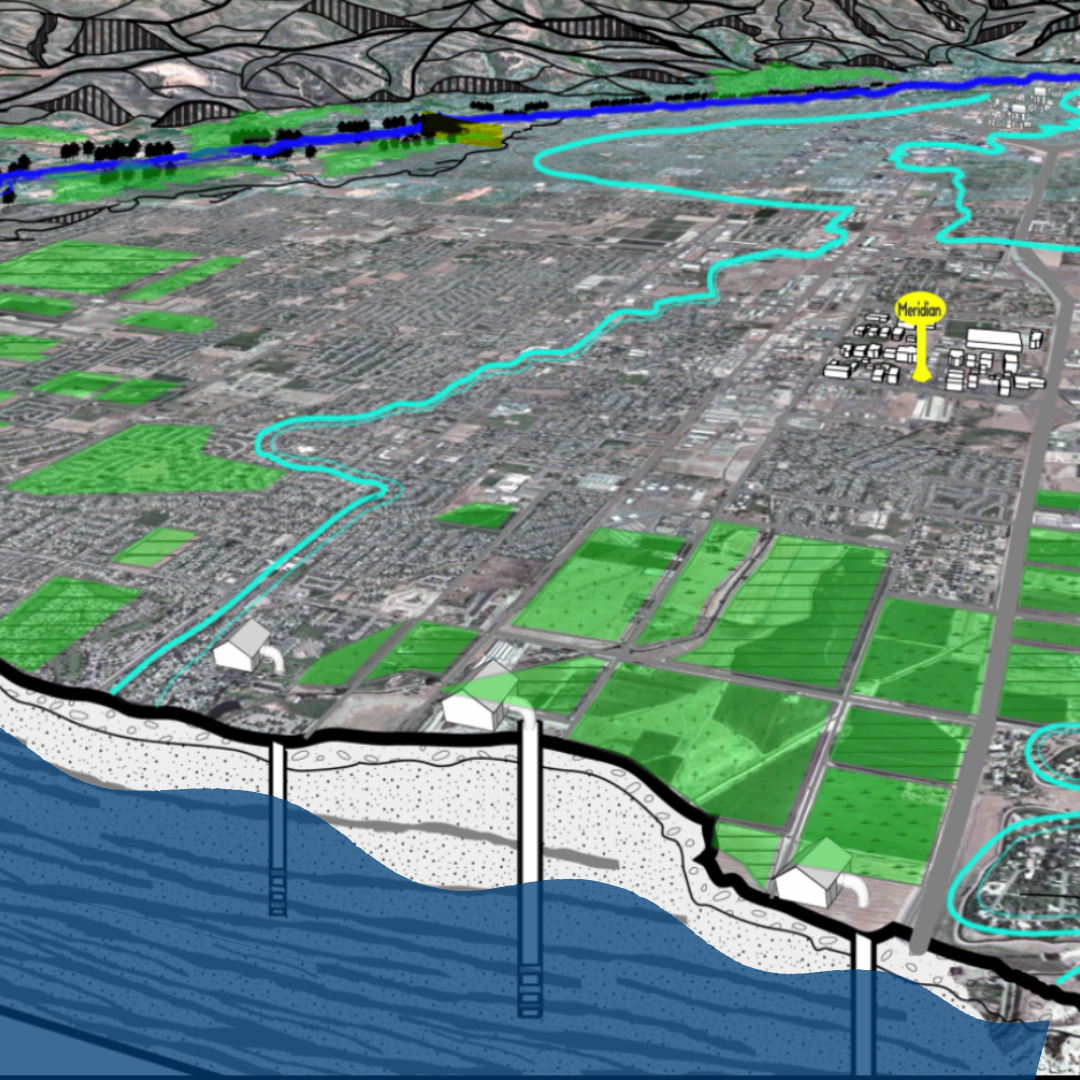
Surface Water vs Groundwater
Surface Water
Surface water is water found on Earth's surface. It can be seen, like in lakes, rivers, ponds, and irrigation canals. In fact, the irrigation water in your subdivision is likely surface water delivered by canals. Because it is on the surface, it's more susceptible to pollution and impacted by weather. For example, hot summer days can cause it to evaporate or reduce the overall supply.
Groundwater
Groundwater is less susceptible to pollution and weather as it's found underground in aquifers. Aquifers are materials, like rock and sand, that are saturated with water. The water moves through the rock and sand, naturally filtering it. Groundwater is replenished from snowmelt and rainfall.
Irrigation
The City of Meridian does not control any surface water. For more information on irrigation, please visit the Irrigation webpage.
Conserving Water Indoors
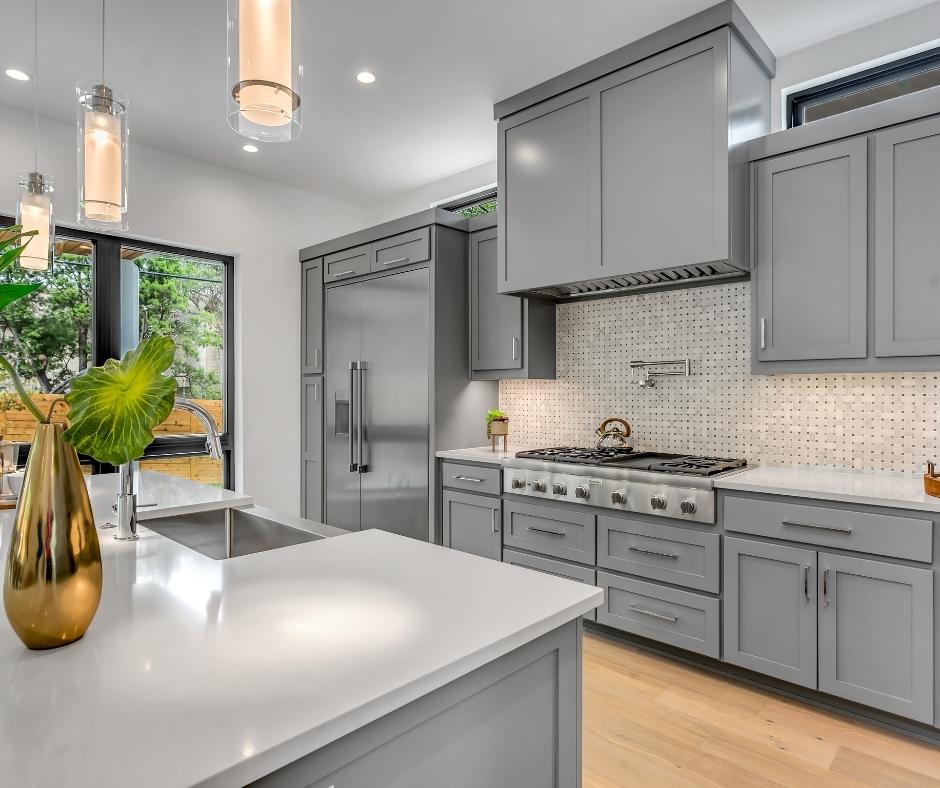
In your Kitchen
- Fully load the dishwasher and clothes washer before running.
- Defrost frozen food in the refrigerator or in the microwave instead of running water over it.
- Fill up the sink when handwashing dishes instead of letting the water run.
In your Bathroom
- Limit your shower time to help conserve water.
- Add a toilet bag or brick in your tank to help reduce water capacity in older toilets (not in low-flow toilets).
- Turn the water off while brushing teeth or shaving.
- Invest in high-efficiency products such as low-flow shower heads and toilets.
Around the House
- Repair dripping faucets. Dripping faucets can waste up to 2,000 gallons of water each year in the average home. Leaky toilets can waste as much as 200 gallons per day.
- Invest in high-efficiency products when replacing old appliances to help conserve water.
- Install low-flow faucets and fixtures.
- Fix leaks as soon as you notice them. A small leak can indicate a bigger issue and can lead to a hefty water bill.
- To calculate how much water a leaky faucet wastes, visit the American Water Works Association's Drip Calculator webpage.
Conserving Water Outdoors
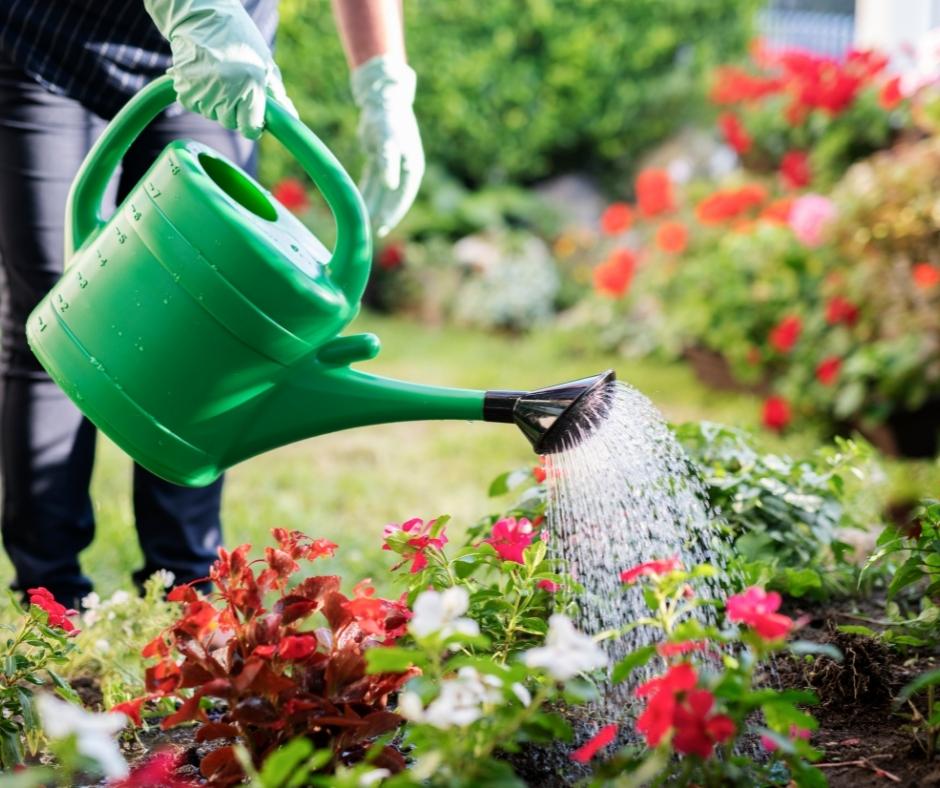
Gardening and Lawn
- Select climate-appropriate plants for Southwestern Idaho (low-water-use native plants).
- Group your plants based on their watering needs to avoid over- or under-watering.
- Place mulch around your plants to reduce evaporation.
- Be conscious of the time of day you use your sprinkler system. Mid-morning and late at night are optimal times.
- Use water timers to avoid overwatering.
- Promote deep roots, which allows access to more water, by watering about one inch per week early in the season and then about two inches in the hot months.
Other
- Sweep driveways, sidewalks, and patios instead of spraying them with water.
- Cover your swimming pools to reduce evaporation by 90%.
Access the City of Meridian Water Conservation Plan Executive Summary.